How the parts fail · 5 min read
How to Clean Refrigerator Condenser Coils on a Sub-Zero
Power off, open the top grille, vacuum along the fins: how to clean Sub-Zero condenser coils, what a clogged coil does, and when to call a technician.
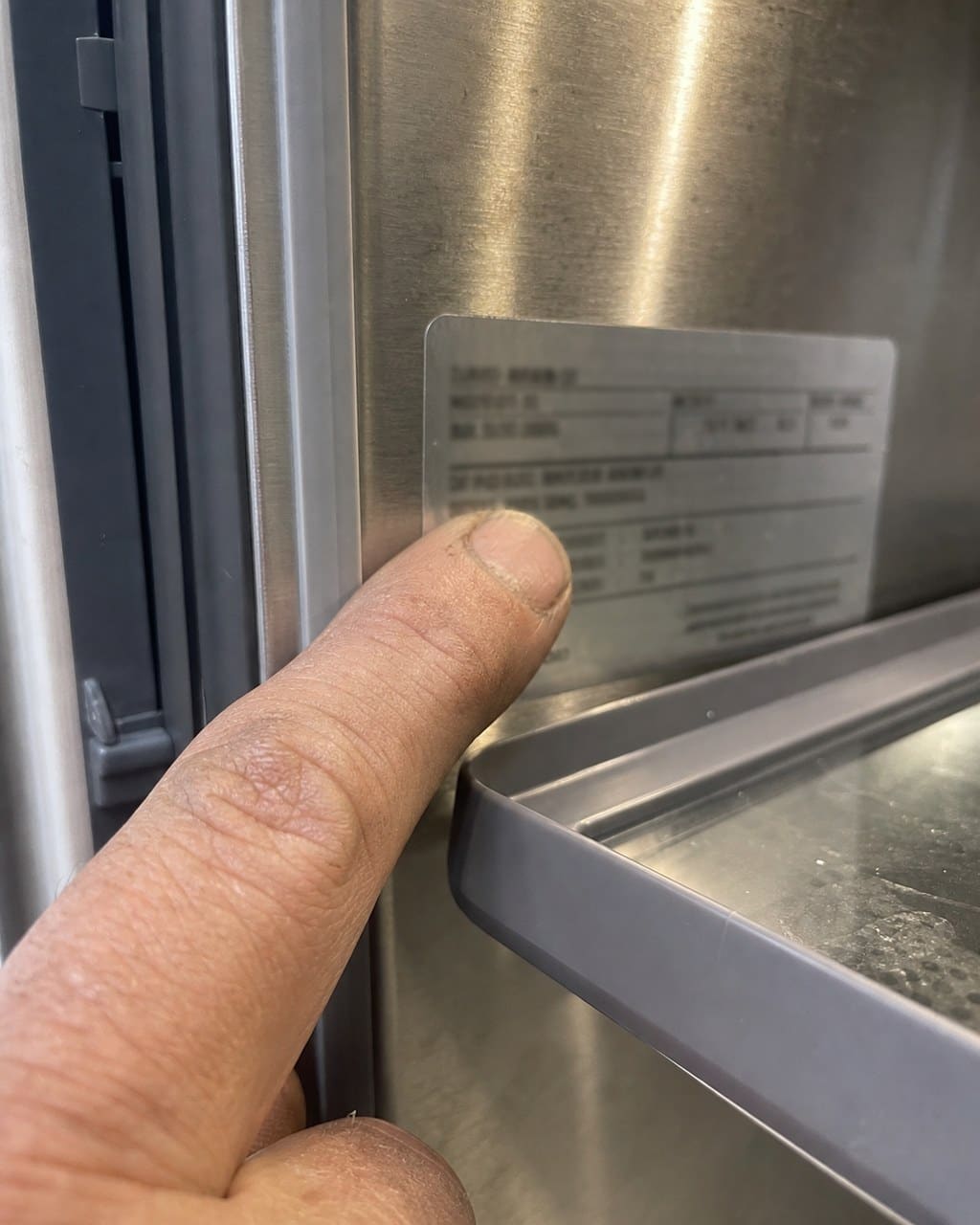
To clean refrigerator condenser coils on a built-in Sub-Zero, switch the unit off, open the grille above the doors, and vacuum the condenser fins with a soft brush attachment, stroking in the direction the fins run. The job takes about 15 minutes every 6 months and needs only a vacuum, a flashlight and work gloves. The condenser is the radiator of a Sub-Zero refrigerator, and a blanket of dust forces the compressor to run longer and hotter. This guide covers what the Sub-Zero condenser does, how it fails, the symptoms owners see, and where DIY cleaning ends.
What Do Fridge Condenser Coils Do in a Sub-Zero?
A Sub-Zero refrigerator moves heat rather than making cold. Refrigerant absorbs heat inside the food compartments, the compressor squeezes it into a hot, high-pressure gas, and the condenser coil releases that heat into the kitchen air. The Sub-Zero condenser is a grid of thin aluminum fins wrapped around refrigerant tubing, with a fan pulling room air across it. On full-size built-in Sub-Zero models, the condenser, compressor and fan sit behind the grille above the doors. On undercounter Sub-Zero units, the condenser sits behind the kickplate at floor level. Both Sub-Zero layouts breathe through the front, so routine condenser cleaning does not require sliding the refrigerator out of its cabinetry.
How to Clean Fridge Condenser Coils in 6 Steps
Cleaning the condenser on a Sub-Zero built-in follows a short routine. Step 1: switch the Sub-Zero off at its main power switch or the circuit breaker, so the condenser fan cannot start near your hands. Step 2: open the top grille, which tilts up, lifts out of clips, or is held by 2 screws depending on the generation. Step 3: put on gloves, since the aluminum fins are sharp, and shine a flashlight across the condenser face. Step 4: vacuum with a soft brush attachment, moving in the direction of the fins, usually up and down, never scrubbing across them. Step 5: pick up lint that fell onto the compartment floor and wipe the grille with a damp cloth. Step 6: close the grille, restore power and give the Sub-Zero 24 hours to settle at 38°F on the fresh-food side and 0°F in the freezer. On an undercounter Sub-Zero, a narrow coil brush reaches the lower condenser rows.
Why Do Refrigerator Condenser Coils Clog and Fail?
A Sub-Zero condenser coil rarely breaks on its own; it fails by smothering. The condenser fan draws in dust, lint, pet hair and airborne cooking grease, and the front of the fins acts as a filter. Grease near a range turns loose dust into a sticky felt that a quick vacuum pass cannot lift. Remodeling raises the stakes: a kitchen renovation in one of the grand 1910s to 1930s homes of San Mateo Park can coat a Sub-Zero condenser with plaster and sanding dust within weeks. Beyond dirt, the Sub-Zero condenser can suffer flattened fins, a condenser fan motor that slows or stops, or, rarely, a refrigerant leak in the tubing. Each fault leaves the coil unable to shed heat, so the compressor runs hotter and longer.
What Symptoms Point to a Dirty Fridge Condenser Coil?
A clogged Sub-Zero condenser shows up as heat and runtime before warm food. The first clue is a compressor and condenser fan running almost nonstop, with warm air pouring from the top grille. The fresh-food side then creeps above its 38°F setting on hot afternoons, the freezer struggles to hold 0°F, and ice production slows. The cabinetry around the Sub-Zero grille may feel warm, and the unit may sound louder. Left alone, a smothered Sub-Zero condenser lets the compressor overheat until its thermal overload trips: a click, a pause, a restart. Check the condenser before anything else, because cleaning it costs nothing and clears a frequent, easily fixed cause.
How Often Is Condenser Coil Cleaning Needed?
The standard interval for a built-in Sub-Zero is a condenser cleaning about every 6 months. Homes with shedding pets, a busy cooktop nearby or ongoing construction should inspect the Sub-Zero condenser every 3 months and clean it whenever a gray film shows on the fins. Pairing the condenser check with the twice-yearly clock change makes it a habit. Look again after a remodel, floor sanding or wildfire-smoke season, since fine particles build up fast. Clear grille openings matter as much as a clean coil: items stored in front of an undercounter Sub-Zero kickplate starve the condenser of air.
When Is Coil Cleaning a Job for a Technician?
Vacuuming the front of a Sub-Zero condenser is a safe owner task; nearly everything beyond that belongs to a technician. Call for service if the condenser fan does not spin while the compressor runs, if fins are crushed across a wide patch, if the tubing shows oily stains that can signal a refrigerant leak, or if the Sub-Zero still runs warm 24 hours after a thorough cleaning. A technician can test the condenser fan motor, measure temperatures and confirm the compressor is healthy. A San Mateo service visit carries an $89 fee, waived when you book the repair. Compressor and sealed-system repair, which a smothered condenser can eventually trigger, falls in the published $1,450 to $3,600 band.
Questions & answers
Can I clean condenser coils with water or a spray cleaner?
No, keep water and spray cleaners away from a Sub-Zero condenser. Liquid drives dust deeper into the fins and can reach electrical parts near the fan and compressor. Use a dry vacuum with a soft brush instead.
Do I have to pull a built-in Sub-Zero out to reach the coils?
No, the condenser on a built-in Sub-Zero is reached from the front through the top grille, or through the kickplate on undercounter units. Pulling a built-in from its cabinetry is a technician job, not part of routine cleaning.
How long does a Sub-Zero take to recover after a coil cleaning?
Allow about 24 hours for a Sub-Zero to stabilize after a condenser cleaning. If the fresh-food side is not back near 38°F and the freezer at 0°F by then, the problem lies beyond the coil.
Does cleaning fridge condenser coils save energy?
Yes, a clean condenser lets the Sub-Zero compressor shed heat faster, so it runs shorter cycles and uses less electricity. The bigger payoff is lower wear on the compressor, the most expensive part of the refrigeration system. If it needs a pro, Sub-Zero San Mateo Repair is at (650) 484-4687.
Book a visit
Rather leave it to a Sub-Zero specialist?
Talk to a Sub-Zero–focused technician about your model, symptoms and access, then pick a window by phone or online booking.
$89 service call, waived when you book the repair. 365-day warranty on all labor.
| Cleaning interval | About every 6 months; every 3 months with pets, heavy cooking or remodel dust |
|---|---|
| Where the coil sits | Behind the top grille on built-ins; behind the kickplate on undercounter units |
| Safe owner step | Power off, then vacuum with a soft brush in the direction the fins run |
| Technician territory | Fan not spinning, crushed fins, oily tubing, or still warm 24 hours after cleaning |
| Local help | Sub-Zero San Mateo Repair — (650) 484-4687 |
Book this repair: Sub-Zero Maintenance & Tune-Up San Mateo — Built-In Care · Sub-Zero Refrigerator Repair Near Me — San Mateo, $89 Call